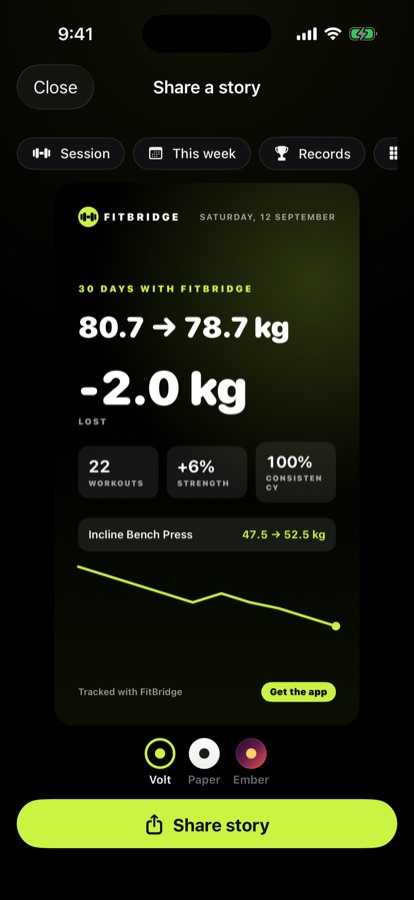
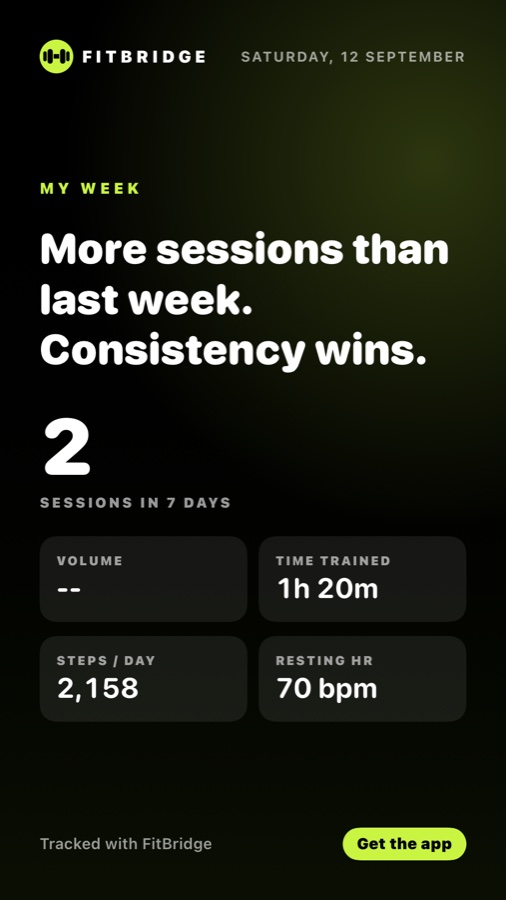
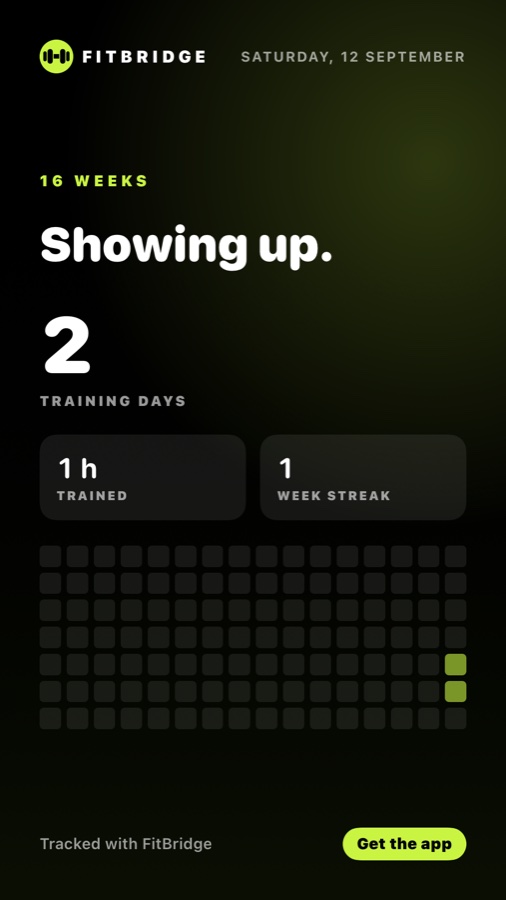
A trainer who has read every set you ever logged.
Screens below are real, taken from the app.
Progressing, stalled, or due a deload.
Three attempts at a weight without every set hitting the target is a stall, and FitBridge says so: keep 67.5 kg, add a set, chase 6 clean reps, trim two accessory sets. A best set 8% under your recent best is fatigue, and it backs you off for one session. Heavier or more reps than four weeks ago is progress, and it tells you when to add load.
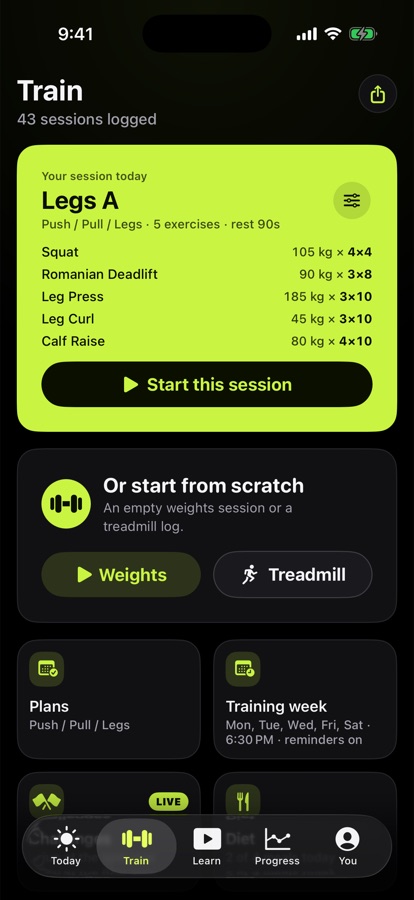
"I'd rest today."
Readiness from resting heart rate and HRV, last night's sleep, five days in a row, yesterday's best set. When two of them say stop, FitBridge says rest, tells you why, and moves the session to tomorrow with one tap. When the week is behind, it tells you by six o'clock.
Ask your coach. It looks it up.
"How is my bench going?" "Am I recovered enough for legs?" The coach queries your own logs and Apple Health data on the phone as it answers, so it never guesses a number. Nothing leaves the device.
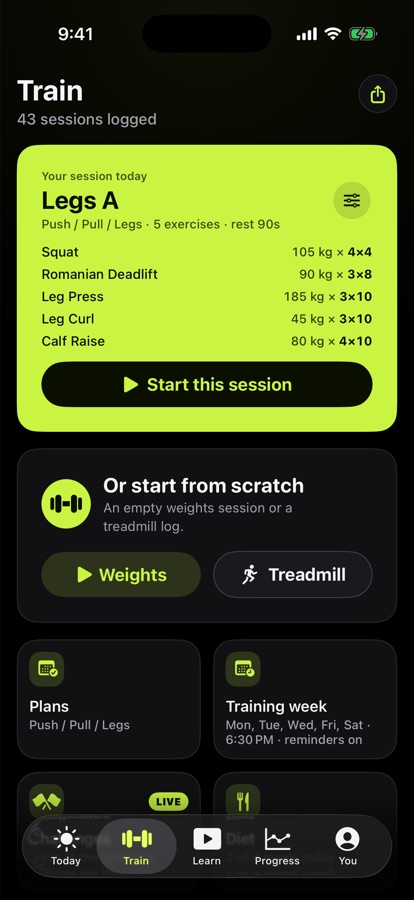
The plan already has your numbers in it.
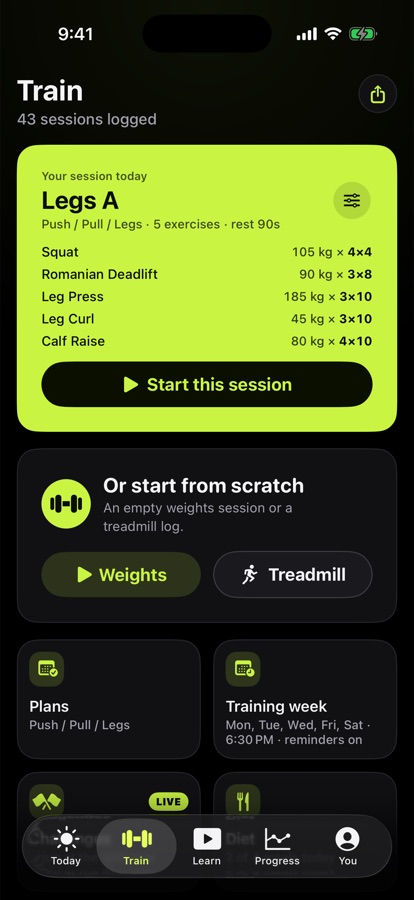
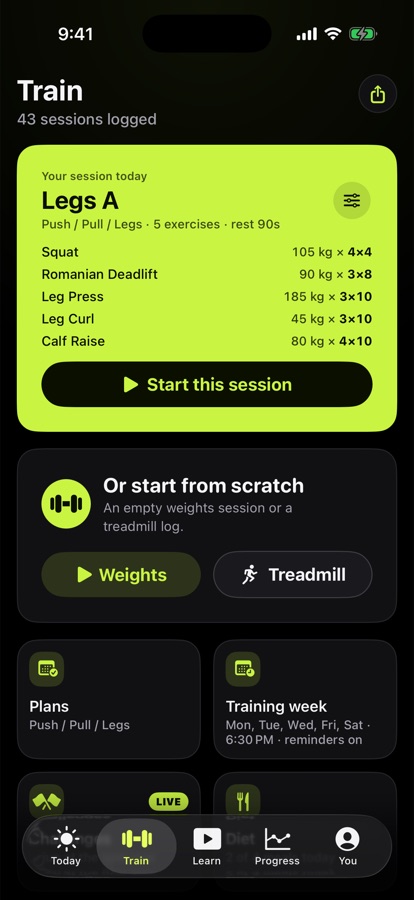
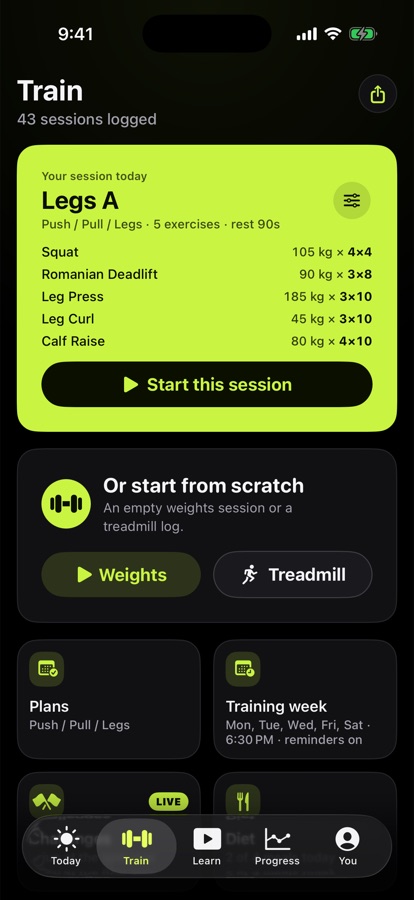
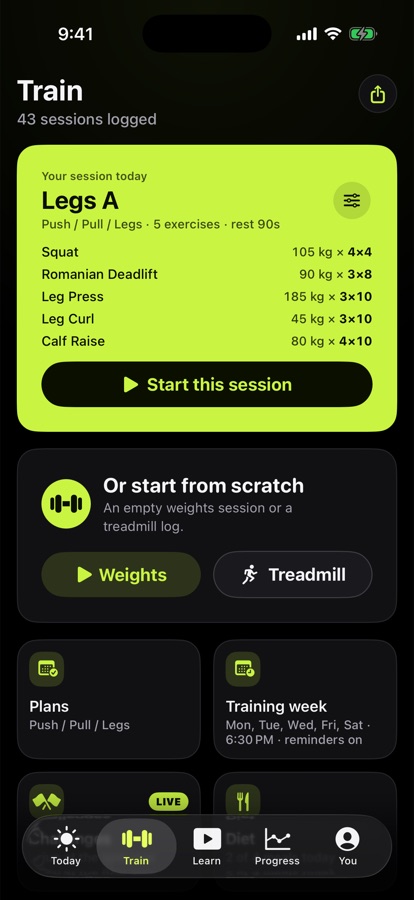
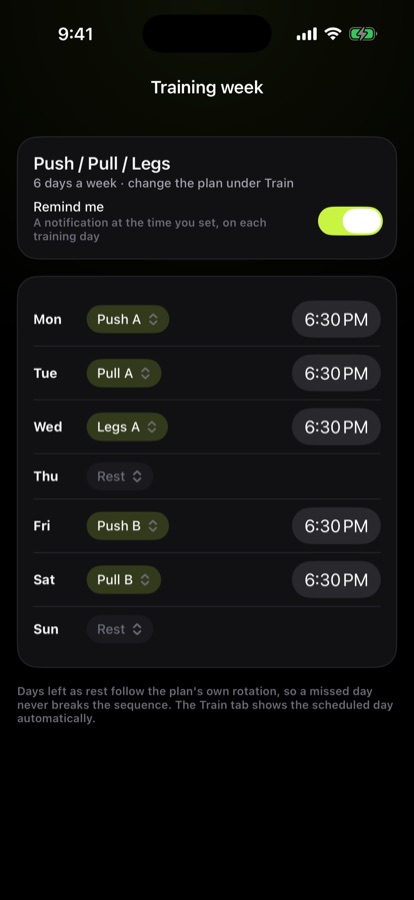
Lay your programme over the week, and each session opens with the sets, reps and weights the verdicts chose, scaled to how recovered you are. Rest is timed from your heart rate. Your session lives in the Dynamic Island.
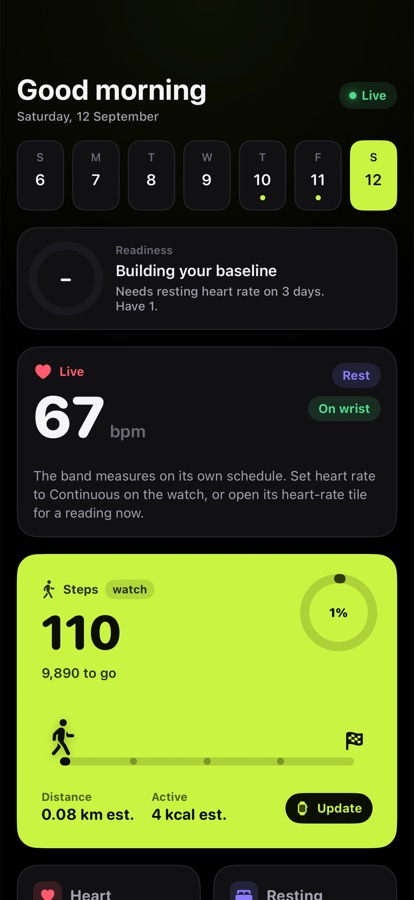
Eight weeks on one strip.
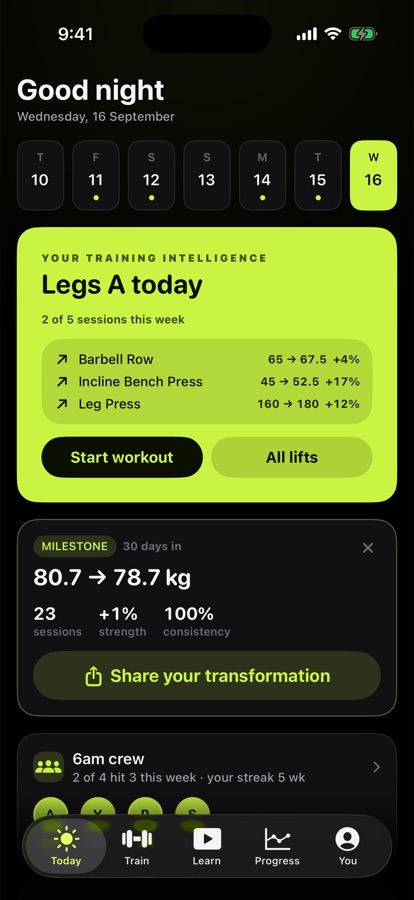
Tap a day and Today becomes that day: the sessions you logged, the steps, the resting heart rate, the rings. Rest days say so. The dots show where you trained.
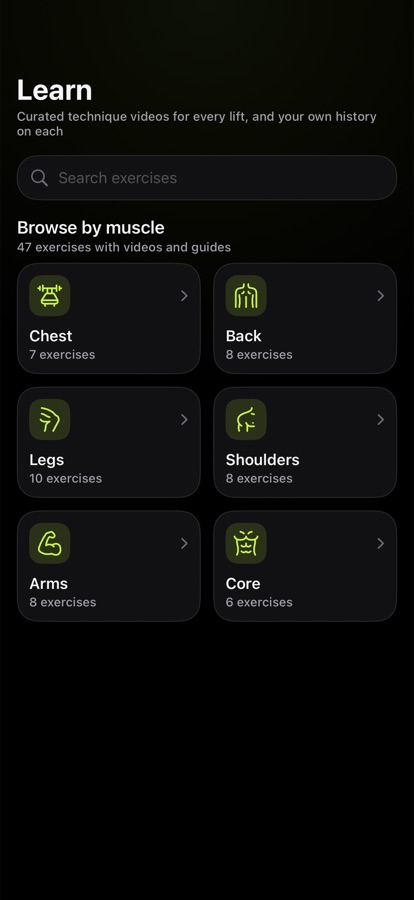
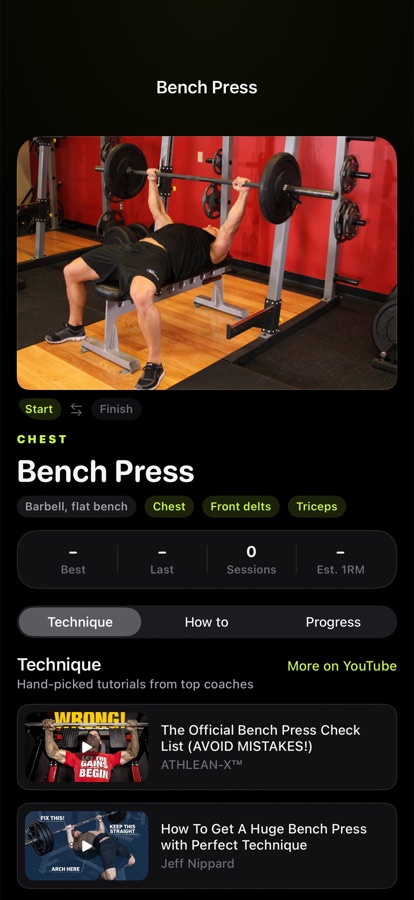
164 exercises with guides, videos and photos.
A written how-to for each: setup, the rep, breathing, the mistakes. A coaching video from the people who teach this for a living. Start and finish photos. And under all of it, your own last, best and next numbers.